
“Humbleness is important” - an interview with Olof Dreijer
Plus Dgohn, Calibre and Mike Pickering

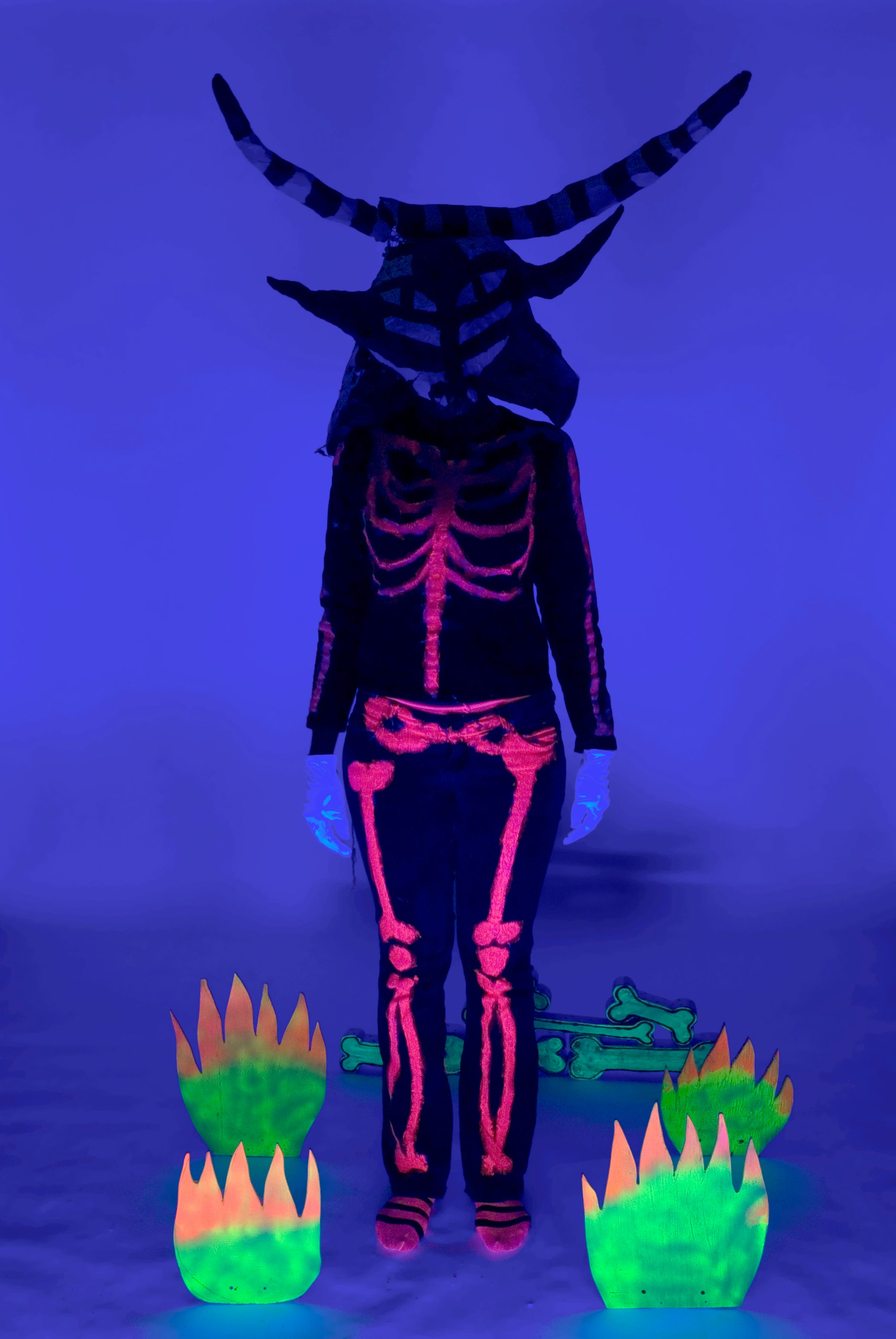
Were you slightly intimidated by The Knife? I know I was. I loved - and continue to love - their music but the duo of Olof and Karin Dreijer always seemed far too chic and sharp for the likes of me, their music wrapped up in conceptual frameworks I was too basic to understand. They did an opera, FFS, based on Darwin’s On The Origin of Species.
This feeling of aloofness was, of course, entirely in my head. But it was still a surprise when Olof Dreijer started to release music under his own name in the 2020s and it sounded so incredibly warm and friendly, a 180-degree turn from The Knife’s ice-y precision, without sacrificing any of the music’s melodic brilliance and production nous.
This wasn’t Olof’s first solo music. He released a run of excellent 12 inches as the rather mystical Oni Ayhun from 2008 to 2010. But this felt different, more personal, a musician that was finally happy to show his face, both literally and figuratively. I saw Olof play live at Sónar 2024, with Diva Cruz, and it was an explosion of colour and funk.
Then, earlier this year, Olof Dreijer announced his debut album Loud Bloom and I noticed that he was living in Barcelona, like me. Not only that, but he was up for interviews. And so I invited him to the Radio Primavera Sound studio, one day late in April, my insecurities about The Knife still leaving me convinced that he would never show up. But show up he did, on time, in shorts and entirely charming.
The full interview went out on the Line Noise podcast this week. But, knowing that many people prefer text, I decided to run a slightly edited version in the newsletter. I hope you enjoy it.
The wonderful Loud Bloom comes out May 8 and Olof is DJing at Primavera a la Ciutat on Wednesday May 3.
Ben Cardew: How long have you been in Barcelona
Olof Dreijer: I just came here last year, so I’m very, very fresh.
Ben Cardew: Have you collaborated with any local people?
Olof Dreijer: Not so much yet. I’ve been trying to reach out a bit, but I haven’t had the time. It’s been a very busy time with the album and moving and the studio and everything. So, but I really look forward to doing that.
Ben Cardew: I was listening to the album, Loud Bloom - excellent album. And I was wondering, actually, if Barcelona had influenced your sound, particularly Cassia and Shisandra which have what sounds a bit like the palmas of flamenco. Is that an influence?
Olof Dreijer: I finished the album before coming here but I love flamenco. It’s funny being here now. I’ve gone to a few flamenco shows, and I came back into bringing up some Roma music that I grew up listening to. My mother used to organise a film club at the library she worked at, and there she showed, for example, Latcho Drom.
Have you heard about this film? It’s an amazing film that I saw then in the 90s when it came out, and I showed it to my partner now. And it’s a film showing the journey of the Roma people. And when you listen to flamenco, obviously you know that being from Spain, but seeing this film is very nice. You see all the different genres of music that the Roma people have brought with them on their journey. And you totally hear this in flamenco.
And I think this is one of the things that makes it so strong - how so many genres of music you can hear in it and it’s so advanced. And so I - on my birthday in the winter - I actually asked to get a flamenco lesson for my birthday. So we had that with some friends. A friend of mine who is a flamenco dancer organised a little, you know, just trying out the basics. And so, for sure, I think I love the drama and, you know, the super advanced rhythm that I will probably never understand.
Ben Cardew: Loud Bloom is the first album under your own name. Obviously, you’ve been making music for decades. How important was it for you to use your own name? And why did you decide to do it?
Olof Dreijer: There are many reasons. I think one being that with my previous project, I think I was kind of hiding a bit. I was hiding my privileges, and I think I was also interested in a kind of theatre and playing with gender on stage. And at the time, I think I wanted something more ambiguous. I was doing drag and I was playing - I was making my own costumes with duct tape and foam and all kinds of crazy things. It was very Berlin. I was living in Berlin at the time, this is around 2008 I started that, I think. But whereas now, I think I just wanted to kind of carry my privileges and stand for them and do it the best I can with that. And I think that was the main reason.
Ben Cardew: One thing I really feel about this album is it feels very warm, very lively. And I wonder - because it’s maybe unfair but I think The Knife are always seen as being sort of scary and unapproachable and slightly mythical - I wondered if that sort of myth, in a way, annoyed you.
Olof Dreijer: Yeah, it’s funny, because I think already towards the end of - especially the second half of our last tour, Shaking the Habitual - we already then reacted towards this mystical, dark image and we were very colourful and upfront and dancing. Like, we felt we were very generous.
But I think because we were not fronting the music with only our faces but, instead, we were presenting ourselves together with a collective, that already (as I understand it later) was seen as mystical because the focus on the individual in the music industry is so strong. And when you do something else, it’s suddenly seen as mystical. But I think our intention was to be very generous and playful and so on.
And whereas now, I think - yeah, a lot of time has passed, it’s like more than 10 years ago - I think my wish to do something very happy and giving something that gives you energy and gives myself energy and emotion is also driven by... I think we live in times where we need energy and something happy to cope with the day. And I also really feel we can have more cheesiness and colour and emotion and drama in electronic music. So it’s many reasons.
Ben Cardew: I’m glad you mentioned being playful. That’s one of the notes I have. A song like Plastic Camellia feels very playful to me. And that was kind of an intention, right? To play?
Olof Dreijer: Totally. I really like to play with things that could be seen as a little bit bad taste, or cheese, or kitsch. That’s why I use these kind of electronic flute sounds. I think they just put a smile on my face. And the synth or the keyboard I use is also seen as a “bad” keyboard and I think it’s just fun. But still, to do that with a serious intention to make something that should hit in the stomach. It’s not only a joke.
Ben Cardew: You mentioned your synth sound. One thing I love about your work is it has a very distinct synth sound. I’ve been trying to describe it and for me, it sounds slightly aquatic and it sounds, on the other hand, slightly squirty. Do you know what I mean? Does that make sense? Do you have a way of describing that kind of synth sound?
Olof Dreijer: I’ve had so much time off from making music and just working with other things and being also around youth and organising field recording workshops. And I realised that I have actually spent a lot of time in my past studying on my own - not official in any way - a lot of field recording music and also musique concrète. If you’re a bit younger, you might not know that. But when you make music with sounds like this [taps table], which now can be a bit academic or a bit excluding - and it’s often a person who might have an education who did that music or whatever.
But those are my sonic references when I make electronic sounds. And so, when I sit with the synth in the lap, in the computer, real sounds around us are always a reference. Like, okay, now - maybe not that I think, “Now I want to make a sound that sounds aquatic,” like you said - but I think subconsciously they are there. And that’s why people often say, “Oh, that sounds like a balloon that you open.” Or “That sounds like a bird” or whatever. But it’s a synth trying to pass as a bird or whatever?
Ben Cardew: You mentioned in the press release of the album that you want to get away from the macho forces in dance music. Why do you think dance music has gone that way? Because you listen to early Detroit techno or early Chicago house - melodies all over the place, songs, that kind of thing. Early Detroit techno, again, loads of really beautiful melodies. And I agree with you, I think a lot of dance music has got very macho, very hard. Why do you think this has happened?
Olof Dreijer: I don’t know. I mean, there is so much to say, but I mean, I was thinking... I’m thinking now, should I give an encouraging answer or maybe a not-so-encouraging answer? But let’s try to do both.
The not-so-encouraging side, I guess, is that we are in a patriarchy and we are in a regression time and things are going backwards. And it’s funny to see that men who already have a lot of power want to take more power and feel the need to be more macho or whatever and this is affecting everything.
But parallel to that, if you just look at the music, the funny thing - or not-so-funny thing - is that in the past, in the 80s and 90s, the big techno producers would play much more mixed than they do today. Like, Jeff Mills would play some disco, and there would be some samba grooves. It was fast and very pushy but it was quite all over the place. And if you do that today, you’re seen... I mean, on one hand, it’s coming back now. You also see that people mix in a bit of everything, which is very nice. But I always mixed a lot and I always felt people say that it’s very eclectic and all over the place.
Ben Cardew: Loud Bloom is very much an album. It’s well-sequenced. It starts off sort of danceable, but not too fast. Then you bring in the voices, then it kind of goes faster, then you pare it back towards the end and there are more ambient songs. Did you spend a lot of time thinking of it as an album or were you just making tracks and thought, “Well, this will work”?
Olof Dreijer: No, I wasn’t planning to make an album at all. It just, after a while, felt nice to compile this chapter and, in a way, also to close it a little bit and then take the next one. But now, listening to it together, it’s very nice to see how the tracks give each other something. And so, yeah, I’m surprised that it actually makes some sense together, actually.
Ben Cardew: Another thing I love about this album is there are some really great collaborations. And one of my favourite songs, Acuyuye featuring Diva Cruz - it sounds like you were having a lot of fun making that. Was it fun?
Olof Dreijer: Yeah, it’s very funny, because Diva - I’ve known her since before she played percussion in the Fever Ray band. And so that’s how I got to know her because I was working on instrumentation and gave rhythms for the percussionists. And then she asked me if I could help her to make her debut as a singer or rapper, because she had only been like a professional percussionist in ballets for many years. And her intention was really to comment on the macho world in Colombia, where she’s from.
And so we did two songs that were very much like protest songs, very explicitly political. And then, when we had done those, we just felt like, “Okay, but let’s just do a funny track.” And she wanted just to talk - because we both love to cook a lot - so let’s just do a track about food. So Acuyuye came about like that - she just talked about cooking and food, and it’s very... we made it very fast, actually.
Ben Cardew: Okay, another song with a great collaboration: Makwande with Toya Delazy. This is a slightly sort of train-spotting question but she is South African and it sounds to me like you use the click consonant you get in some African languages as a sort of percussive element in the track. How did that idea come about?
Olof Dreijer: First of all, I’m just so grateful that I can work with that language. It’s really like my favourite rap language, and it’s just sonically so amazing. And I think there was both a sonic idea - just like I like to play with this stretching and granular effects - and it’s also a way to integrate the vocal in an electronic setting.
Because I don’t like when you separate things too much; often the vocals aren’t integrated in the musical world enough. But then the thematical side of it was more that she’s kind of talking about taking over the ownership of how you are being perceived in society. And I was also... I wanted to play with the shadowing voice, you know, behind her, and that the voice becomes all these different voices you can have in your head. Not that that comes across but sometimes it’s fun to just have a thematical approach to things, and that might make you do other sonic things.
Ben Cardew: Another collaboration is Echoed Dafnino with Maman. That started as a remix, right?
Olof Dreijer: Yeah. Well, when I heard his vocal - or his voice, basically - for the first time, I tried to make different mashups and get it into my DJ set and it never quite worked. And so I started doing a remix and then I started sending some things to him and he really liked that. And he added some of his new vocals and then I did some more melodies and stuff that made it into a new track. So it felt like it became a bit more than a remix. I hadn’t planned to have it on the album like that but it just felt like it made sense and lived in that sonic environment. And he was very happy about this, so he wanted me to produce some more things for him. So I think that that’s very exciting.
Ben Cardew: The album sounds quite jazzy to me. Do you listen to much jazz?
Olof Dreijer: That’s funny you say that. Nobody has picked up on that but it’s totally correct. I would say that that’s basically my main base. I started playing jazz music as a kid and have always come back to that. And what I do is some kind of jazz in a way, even though there is so much awful jazz music.
But this freedom - I think I am very grateful to have that approach, because it is very free. And I think you might not hear it so clearly but I think this approach of classic jazz - where you play a theme, it might be short and then you have improvisation and you let all the different instruments improvise, and then you come back to the theme - I think, in a way, that’s kind of a form that I use somehow.
Ben Cardew: You played jazz as a child. On which instrument?
Olof Dreijer: Saxophone.
Ben Cardew: I think you said in an interview that you constantly learn new instruments, but only at quite simple levels. What have you learned recently?
Olof Dreijer: Right now, I’m more seriously learning to play the tamborim, which is a small hand drum that you play in samba. And I do that with a teacher and a group online course in Rio, so I’m with them every week. And it’s quite difficult, but if I manage to play well enough, I might try to do it in the live show, but with effects and, you know, making it into something electronic. So we’ll see.
Ben Cardew: If it’s a school in Rio, they’ve got pretty high standards as well.
Olof Dreijer: Yeah, oh yeah. You play it in 140 BPM, so it’s quite fast. But I’m still at like maybe 110 or 120, so I need the time. We’ll see.
Ben Cardew: We were talking earlier about collaborators. What do you think is the secret to a good collaboration?
Olof Dreijer: I think the kind of collaborations that I have done have been with people who are quite different from me and I think that has always been a strength.
It’s very challenging and can be difficult to make it work but when it works, it’s very interesting. Like, for example, in 2010 or 2011 or something, I started going to Tunisia to work there with a composer called Houwaida Hedfi, and I played in her band. And she wanted me to make electronic sounds that work in her sonic environment and that was very difficult. But bringing a bit the mindset I was speaking about before - having acoustic or real sounds that are around us as a reference - helps a lot.
But often, in world music for example, it’s common that the electronic sound should be very different than the acoustic sound. There should be this contrast and it should sound a bit “cool” and modern with electronic. And I like to do the opposite: rather make electronic sounds that really blend in, in another way, and are softer and don’t take too much attention from the acoustic sounds. I think this humbleness is important, when you meet a collaborator who has a very different skill set.
Ben Cardew: I strikes me that you’re very happy to be more in the background, to have your music in service of something else. Like you mentioned how you worked on the live percussion for the Fever Ray tour, for example, which I think is a very nice impulse to have.
Olof Dreijer: Yeah, totally. That has been my go-to approach for many years, and it’s only now with this album that I put myself in the centre, which I’ve never done before in my life. So it’s... I’m trying something new.
Ben Cardew: How do you know when a song is done? You mentioned this earlier: it’s very hard for you to say goodbye. How do you know when to let that song be finished?
Olof Dreijer: I think I never... I mean, I do say it’s done but I think I more say that it’s done for the moment. And the mastering moment has always been a bit anxious. But nowadays when I DJ, I can play a new version. So I keep changing the tracks and for the live show, I have made new versions of many of the tracks. So it’s still something I need to learn - to let go and maybe make a new song instead of a new version.
Ben Cardew: Version 27…
Olof Dreijer: Oh, yeah. Totally. But it is what it is. It’s a process.
Some listening
Dgohn - I Couldn’t Remember So I Made Something Up
I can’t work out if I am more impressed by the fact that I Couldn’t Remember So I Made Something Up - the first single from Dgohn’s forthcoming album for Planet Mu - is in 15/8 time or by the way that the producer plays so smoothly with the song’s experimental bent that I didn’t even notice the warped time signature until someone pointed it out. Because that’s the world we’re in here: highly experimental breakcore that goes down as smoothly as a Barry White ballad. It’s all so sharp, so bright and satisfying.
The album, Tessares, is great too. At times it reminds me of Photek, when Dgohn is content to let the drums talk; at others it’s a little Boards of Canada, for the child-like touches of melody; sometimes it’s just too rhythmically twisted for words. Holly Can Swim But She Doesn’t Really Like It, for example, is like a waltz with a limp; while Whistling on a Tuesday uses an Amen break that seems to slow down and speed up at will.
When I spoke to Calibre recently for the Line Noise podcast, he compared his new album, Tricklremore Sea, a to “an emotional experience of life where you reach a certain period and start to look back on things you’ve done rather than looking forward”. It’s a description that makes particular sense for Deflower, a beautiful, drifty, emotional song that sounds like a half remembered happy day, 40 years on, with the slightest suggestion of a melody gently shepherding around what sounds like field recordings from a dream.
Things I’ve done
1k+ words on an hour-long drum & bass odyssey, three decades on? Don’t mind if I do. Yup, I wrote about Goldie’s mother for Pitchfork: “a beacon of misunderstood ambition you can’t quite believe they let anyone get away with, but which absolutely had to be made.” One of my favourite things I have written this year.
Line Noise - with Mike Pickering
Last week I spoke to Mancunian extraordinaire Mike Pickering, a man whose musical history makes ordinary people quake. We talked about Quando Quango, Factory Records (where Mike signed James), being the resident DJ at the Haçienda in the glory years of rave, making the first British house record (perhaps), forming M-People and winning the Mercury Prize, A&Ring Calvin Harris and - most of all - Mike’s new book Manchester Must Dance: A Life of Music, Madness and Moving On Up. is he the best connected man in Manchester? Quite possibly. You can watch the interview here.
The playlists
Apple Music: The newest and bestest 2026.
Spotify: the newest and bestest 2026.
Apple Music: The newest and the bestest
Spotify: The newest and the bestest